

Does your baby seem unsettled, uncomfortable, or difficult to soothe?
At Churchdown Osteopaths, we support babies and families through the early weeks and months of life using a calm, gentle and thoughtful osteopathic approach.
Families commonly come to see us because they have concerns about feeding, digestion, reflux, sleep or settling, or simply because something doesn't feel quite right.
We take time to listen carefully, understand the bigger picture, and support both your baby and your family in a calm and reassuring environment. Where appropriate, we may also encourage families to access support from other healthcare professionals involved in their care.
Do any of these sound familiar?
You might recognise some of these:
Your baby seems unsettled, uncomfortable or difficult to soothe
Feeding feels difficult, stressful or uncomfortable for you or your baby
Your baby struggles to settle or sleep comfortably
Feeding or digestion seems to be affecting your baby’s comfort or settling
Your baby seems tense, stiff, or has a preference for turning their head more to one side
They appear uncomfortable after birth or seem difficult to position comfortably
You feel something just doesn’t seem quite right, even if it’s hard to explain
You have concerns about your baby’s comfort, movement or overall development
The early weeks and months with a baby can feel overwhelming, particularly when things don’t seem to be settling as expected. We’re here to listen carefully, support you, and help you understand what may be contributing to your baby’s comfort and wellbeing.
Here’s how we can help
Supporting babies and families through the early months of life has been an important part of what we do at Churchdown Osteopaths for over 40 years.
We take a calm, gentle and individual approach, recognising that every baby is different and that feeding, comfort, sleep and settling can all be influenced by many different factors.
Our osteopaths take time to understand your baby’s experience, movement, comfort and overall wellbeing before deciding what approach may be most appropriate.
Treatment is always gentle, adapted to the individual needs of your baby, and guided by careful assessment rather than a fixed treatment plan.
Where appropriate, we may also encourage families to access support from other healthcare professionals such as lactation consultants, midwives, health visitors or GPs to help ensure joined-up support for both baby and family.
Whether you’re coming with a specific concern or simply a feeling that something doesn’t seem quite right, we’ll take the time to listen carefully and support you in a calm and reassuring environment.
What to expect
We aim to keep the process simple and supportive.
-
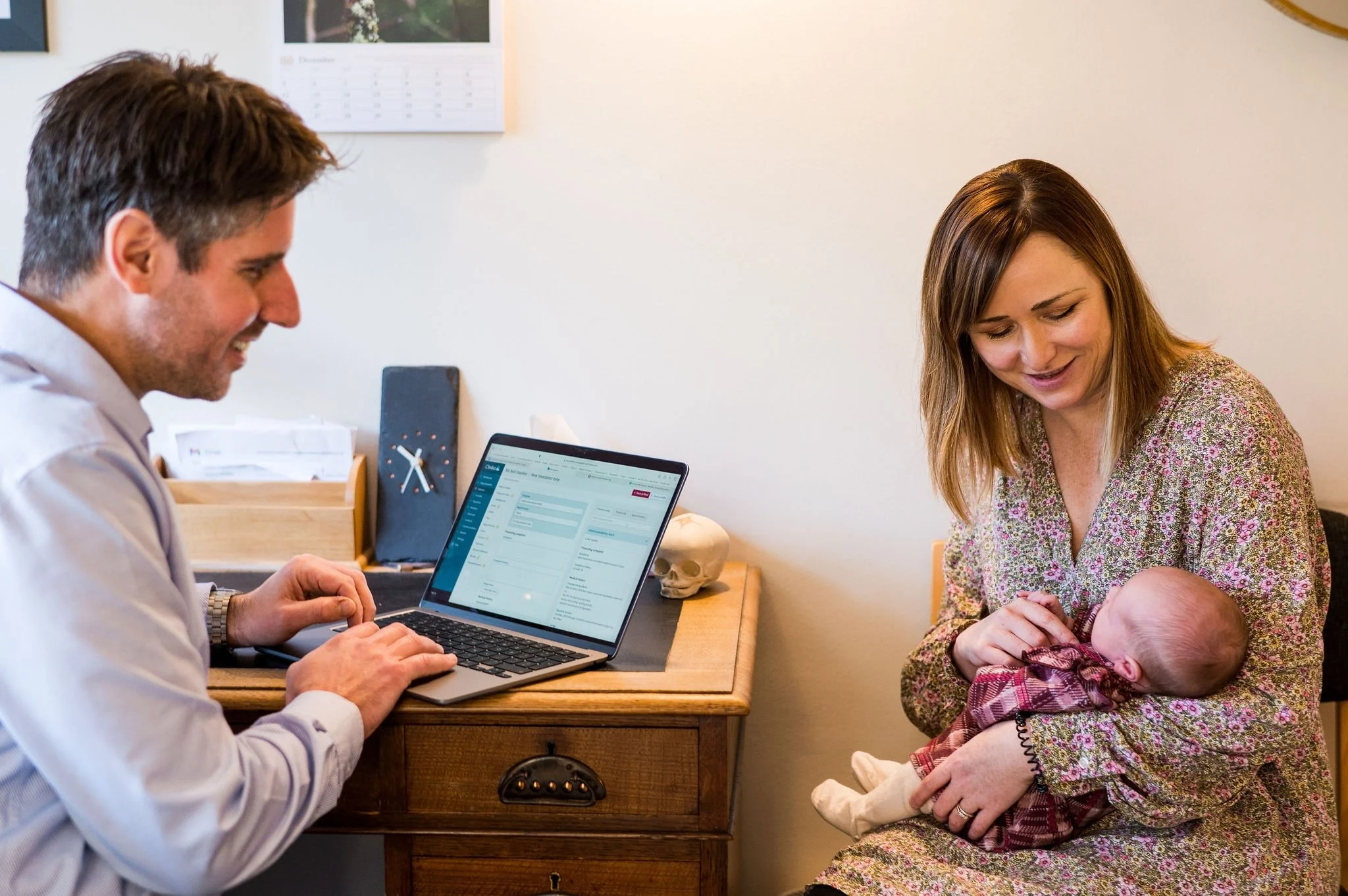
Step 1. Taking time to understand your baby
We begin by exploring what concerns you most about your baby’s comfort, feeding, sleep or settling.
This includes looking at the wider picture around pregnancy, birth, early development and the experiences of the first weeks and months after birth. We’ll also talk about how your baby is feeding, growing and developing, alongside any other support or healthcare input you may already be receiving.
Often, taking time to explore this story carefully helps begin to make sense of why your baby may be struggling or unsettled.
-
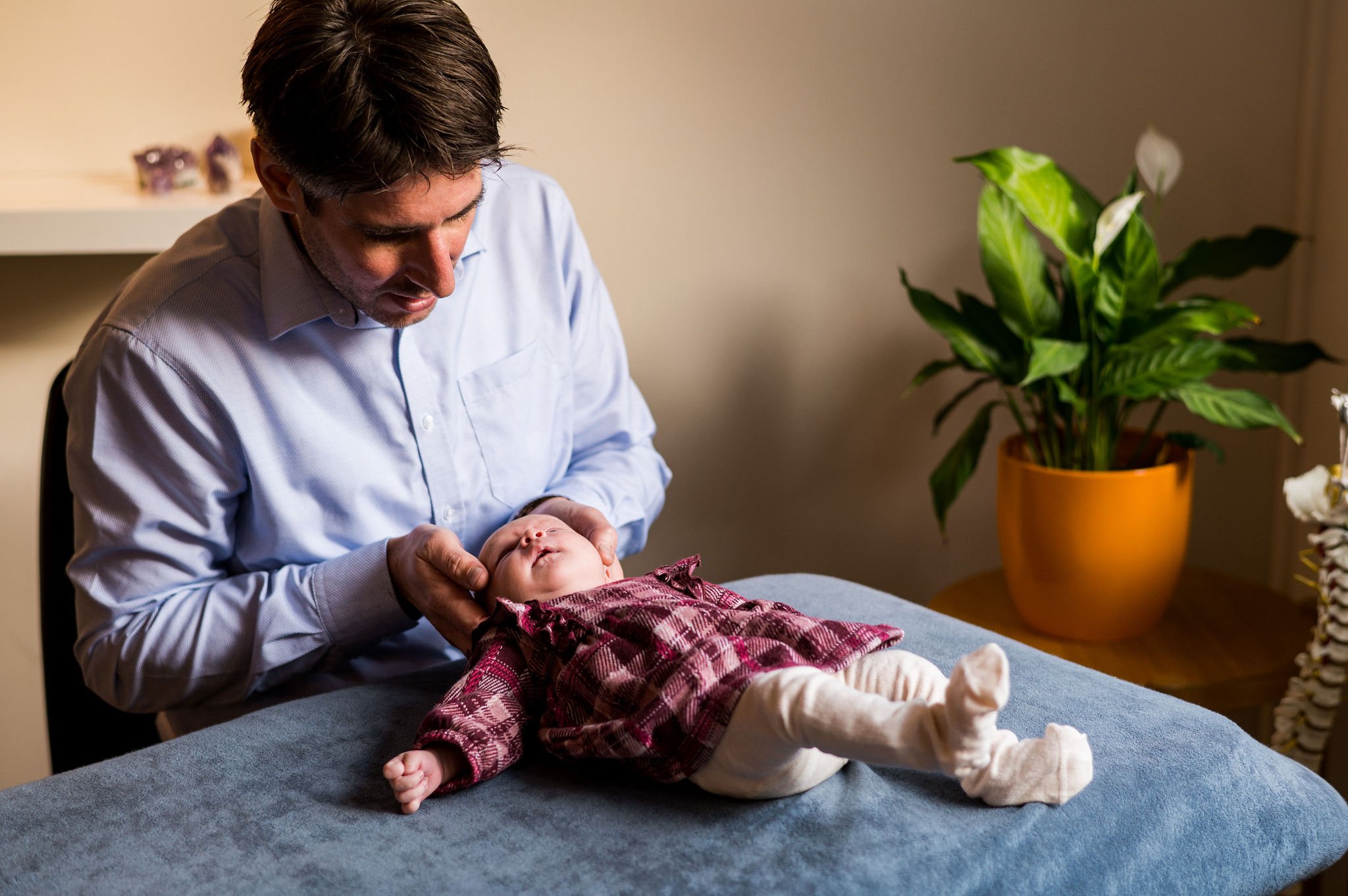
Step 2. Exceptional hands-on treatment
As the appointment continues, we’ll gently observe how your baby moves, responds and settles, looking for areas of tension, asymmetry or discomfort that may relate to the history you’ve shared.
Treatment is always calm, gentle and adapted to the individual needs of your baby. Rather than following a fixed treatment plan, we continually respond to how your baby is presenting and what seems most relevant for them on the day.
We always work at a pace that feels supportive and manageable for both baby and family, recognising that babies naturally have different needs, moods and responses during appointments.
-
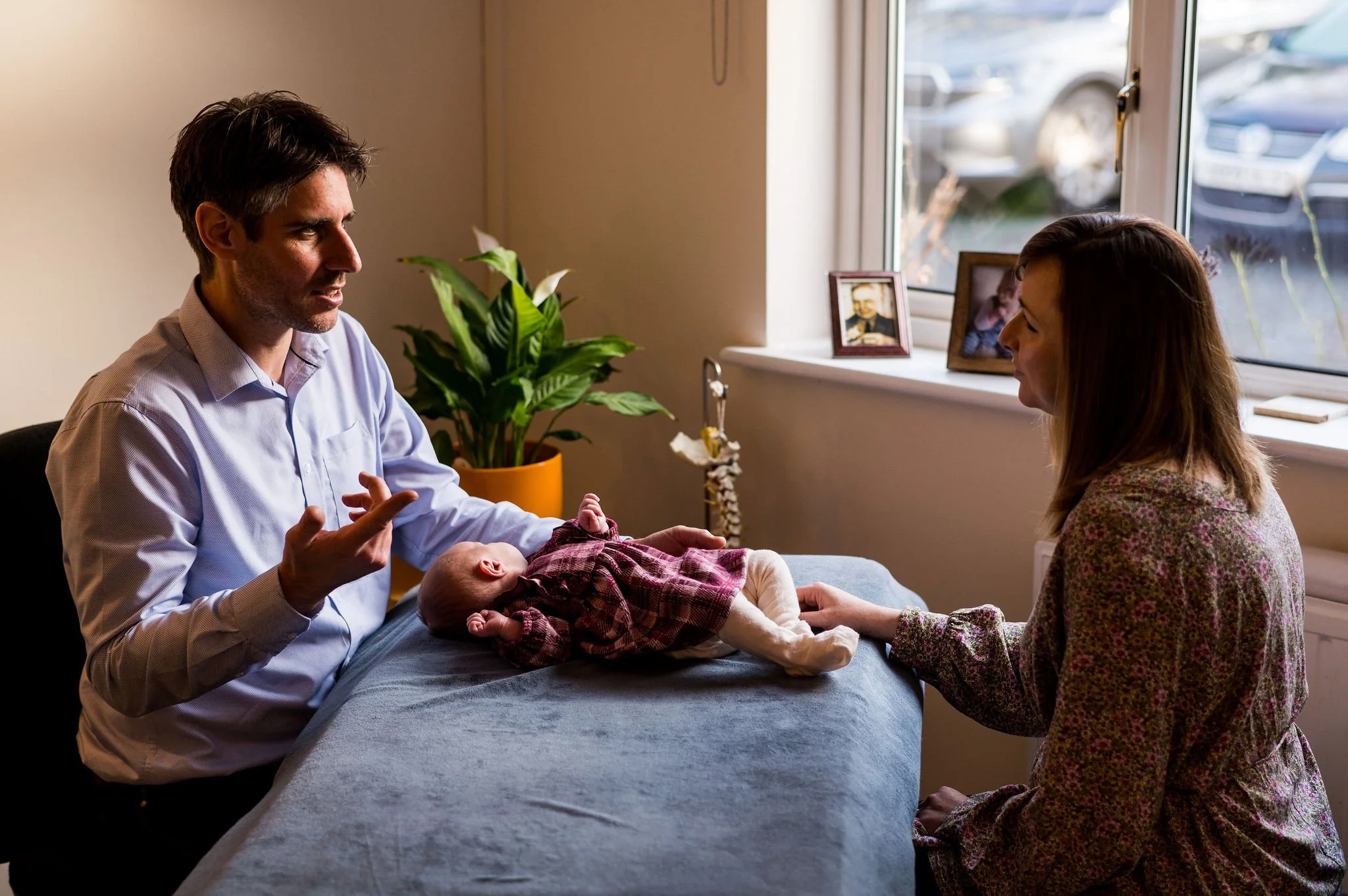
Step 3. Helping you support your baby
By bringing together your baby’s history, presentation and response to treatment, we aim to build a clearer picture of what may be contributing to their comfort or unsettledness.
Alongside treatment, we may offer simple guidance to help support your baby at home and, where appropriate, encourage families to access wider support from professionals such as lactation consultants, midwives, health visitors or GPs.
Sometimes, simply gaining a clearer understanding of what may be happening can itself be a huge source of reassurance for parents.
Appointments and Fees
Initial New Patient appointment (60 minutes)
Senior Osteopath £85 / Associate Osteopath £75
We spend time getting to know you and your baby, understanding your concerns and exploring the wider picture, including pregnancy, birth, feeding, development and any other relevant medical history. This helps us build an understanding of what may be contributing to their problems before carrying out a gentle assessment and, where appropriate, treatment.
Follow-up appointments (30 minutes)
Senior Osteopath £60 / Associate Osteopath £55
We’ll check how things have been progressing since your last visit and spend most of the session focused on treatment and any ongoing guidance or support.
We’re often asked how many appointments a baby will need. The honest answer is that every baby is different, some families come for reassurance or a one-off check-up, while others benefit from a short course of treatment. After your first appointment, we’ll explain our findings and if appropriate, discuss whether we think any follow-up appointments are likely to be helpful.

Want to talk things through first?
Choosing care for your baby is an important decision, and it's natural to have questions before booking.
If you’d like to learn more, ask a few questions, or talk things through before booking, we’d be very happy to help.


Frequently Asked Questions
-
Yes. Osteopathic treatment for babies is extremely gentle and is adapted carefully to the age, size and individual needs of each baby.
Our osteopaths are trained to recognise when treatment is appropriate and when further medical assessment or referral may be needed. We are also regulated healthcare professionals who undertake ongoing professional training and development.
Many parents are surprised by how subtle treatment can feel. The cranial approach to osteopathy uses very gentle hands-on techniques aimed at helping babies feel more comfortable, relaxed and settled in their bodies.
-
Babies can be seen very early in life if needed, including within the first days or weeks after birth.
Many families first come to see us around the two to three week stage, often when feeding, digestion, reflux or settling difficulties begin to become more noticeable. However, there is no “perfect” time and it’s never too early or too late to seek advice.
If there has been a particularly difficult, prolonged or assisted birth, some families choose to bring their baby earlier for a check and assessment.
-
No. While some babies are seen very early on, we also regularly see older babies who may still be experiencing feeding, settling, movement or comfort issues months after birth.
Babies and children continue to grow and adapt rapidly throughout early development, and there is often still plenty we can do to help support comfort, movement and overall wellbeing.
-
The first part of the appointment is usually spent talking through your concerns and getting a fuller understanding of your baby’s story.
This includes discussing pregnancy, birth, feeding, sleep, settling, development and any relevant medical history or healthcare support already involved.
We then gently observe how your baby moves, responds and settles, looking for areas of tension, asymmetry or discomfort that may relate to the history you’ve shared.
Treatment, where appropriate, is always gentle and adapted to your baby’s individual needs.
-
Treatment is generally very gentle and most babies tolerate it very well.
However, babies are babies, and they may sometimes cry, wriggle, feed, need settling or simply want reassurance during appointments. This does not necessarily mean treatment is uncomfortable.
We are very experienced in working around your baby’s needs and adapting the session accordingly to help both baby and family feel as comfortable and supported as possible.
-
Yes, sometimes they do, just as they naturally might during everyday life.
Babies may become unsettled because they are tired, hungry, overstimulated or simply want comfort and reassurance from their parent. We always work flexibly around this and adapt appointments to your baby’s needs on the day.
Parents remain involved throughout the appointment and there is always time for cuddles, feeding or settling if needed.
-
No referral is needed.
Many families contact us directly, although some parents may first hear about osteopathy through recommendations from friends, midwives, lactation consultants, health visitors or other healthcare professionals.
If we feel your baby would benefit from additional medical support or assessment, we may encourage you to speak with your GP, midwife or another appropriate healthcare professional.
-
Families often come to see us when babies seem uncomfortable during or after feeds, struggle to settle, or appear affected by reflux, wind or digestive discomfort.
During appointments, we look at the wider picture around birth, feeding, comfort, movement and settling patterns to help build a clearer understanding of what may be contributing to your baby’s symptoms.
Treatment aims to help babies feel more comfortable and relaxed in their bodies using gentle hands-on approaches tailored to the individual baby.
-
Sometimes, yes.
Feeding difficulties can have many different contributing factors. In some cases there may be tension or asymmetry through the baby’s neck, jaw, shoulders or body that appears to affect comfort and feeding mechanics.
Where appropriate, we may also encourage families to access additional feeding support from a lactation consultant, midwife or health visitor.
We have close links with other local healthcare professionals involved in supporting feeding and early development.
-
Some families seek osteopathic support because their baby seems unsettled, struggles to relax, or has difficulty settling comfortably.
During treatment, we aim to help babies feel more comfortable and relaxed in their bodies using gentle hands-on approaches tailored to the individual baby and their experiences.
Sleep and settling difficulties can have many different contributing factors, which is why we always take time to look at the wider picture around birth, feeding, comfort and development.
-
This can sometimes relate to tension or asymmetry within the neck, shoulders or body.
Sometimes these patterns may relate to positioning during pregnancy or experiences during birth. During appointments, we gently assess how your baby moves and whether there are areas of restriction or asymmetry that may be contributing.
Parents sometimes also notice flattening or changes in head shape developing alongside these preferences.
-
Many families choose to bring their baby for assessment following a difficult, prolonged or assisted birth.
Sometimes babies may appear tense, uncomfortable or unsettled afterwards, while other parents simply want reassurance and a gentle check following the physical stresses of labour and delivery.
This might include births involving forceps, ventouse delivery, prolonged labour, induction or emergency caesarean section.
-
This varies depending on your baby’s history, presentation and how they respond to treatment.
Some babies may only need one or two appointments, while others with more complex birth histories or ongoing issues may benefit from a longer course of support.
Your osteopath will always discuss recommendations clearly with you as treatment progresses.
-
All of our osteopaths are fully qualified, registered with the General Osteopathic Council and insured to practice. Every osteopath who treats babies and children at Churchdown Osteopaths has undertaken additional training in this area and regularly works with young patients.
Our Senior Osteopaths generally have many years of additional clinical experience and may have particular leadership, teaching or mentoring roles within the practice or the wider profession.
However, our Associate Osteopaths are also highly experienced clinicians, many with extensive postgraduate training and a strong interest in caring for babies and children.One of the strengths of Churchdown Osteopaths is that we work collaboratively. We regularly discuss cases, learn from one another and support each other through ongoing mentoring and professional development. This means families benefit from the collective knowledge and experience of the whole team.
If you're unsure who to book with, we're always happy to recommend the osteopath we think will be the best fit for your baby and your family's needs.
-
It can be helpful to bring anything that normally helps settle or comfort your baby, such as:
Milk or feeding supplies
Dummies
Favourite toys or comforters
Muslins or blankets
White noise devices if you use them
Some parents also choose to bring their baby’s Red Book, although this is not essential.
-
Absolutely.
Appointments are designed to work around your baby’s needs as much as possible, and there is always time for feeding, cuddles, changing or settling where needed.
We aim to create a calm and supportive environment for both baby and family throughout the appointment.
-
Yes.
We value collaborative working and, where appropriate, may encourage families to access support from other healthcare professionals such as lactation consultants, midwives, health visitors and GPs.
We also have links with local professionals involved in supporting infant feeding and postnatal care.
-
All osteopaths in the UK are regulated healthcare professionals and must be registered with the General Osteopathic Council (GOsC) in order to practise.
Training in child development and paediatric care forms part of undergraduate osteopathic education. However, many osteopaths choose to undertake additional postgraduate training and professional development focused specifically on treating babies and children.
At Churchdown Osteopaths, all osteopaths treating babies have undertaken further training in paediatric osteopathy and continue to develop their knowledge and experience in this area.
As a practice, we also work closely together, regularly sharing experience, discussing cases where appropriate, and supporting each other through ongoing learning and professional development.
To book appointments:
Would you still like to find out more?
If you’re interested but would like to discuss this further, please do fill out the form below to arrange a telephone chat with one of our Osteopaths
Find Us:
102 Chosen Drive
Churchdown, Gloucestershire
GL3 2QU
We are located in Churchdown, between Cheltenham and Gloucester, minutes from junction 11 & 11A of the M5
Our practice is a proper shop frontage next to the newsagents, with easy parking directly outside